


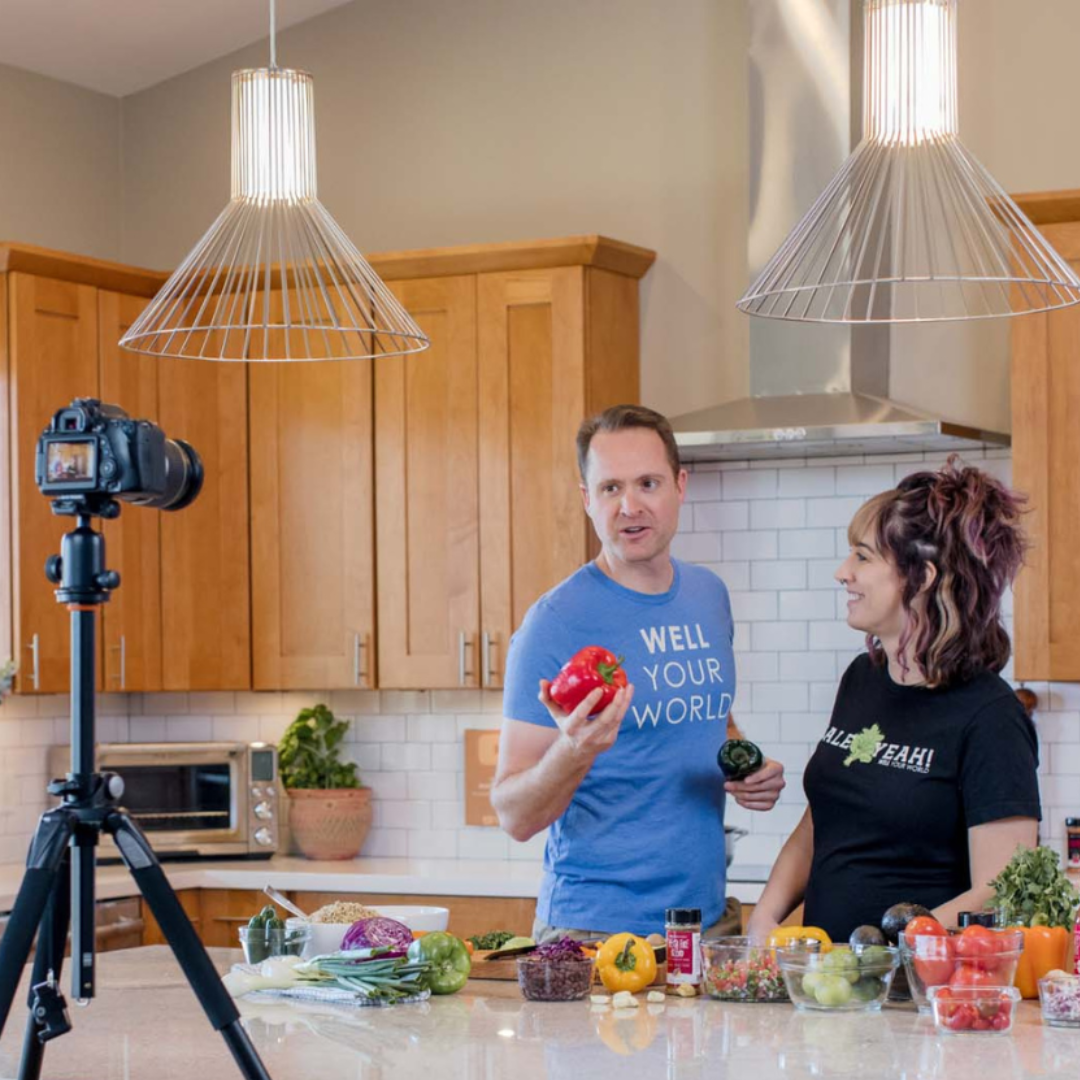


I remember the moment I realized I'd been doing this all wrong.
I was watching yet another cooking video where someone was dicing vegetables at lightning speed, talking about "mirepoix" and "julienne cuts" and using seventeen different pots to make one meal. The chef made it look effortless, but I felt exhausted just watching.
And then it hit me: this is why so many people give up on healthy eating before they even start.
We've been sold this idea that eating well requires you to become a chef. That you need knife skills, fancy equipment, complex techniques, and hours in the kitchen. That if you can't make restaurant-quality meals, you might as well just give up and eat whatever's convenient.
It's complete nonsense. And it's keeping people sick.
Somewhere along the way, healthy eating got hijacked by food culture. Suddenly, it wasn't enough to just eat good food—you had to make it beautifully, photograph it perfectly, and present it like you were running a restaurant.
Food blogs and cooking shows made everything look complicated and time-consuming. Even "simple" recipes had twenty ingredients and multiple cooking techniques. The message became clear: if you're not a skilled cook, healthy eating isn't for you.
But here's what nobody tells you: the healthiest populations on Earth aren't master chefs.
The people in Blue Zones—those areas of the world where people live the longest, healthiest lives—aren't spending hours crafting elaborate meals. They're eating simple, straightforward food made from a handful of ingredients. Rice and beans. Potatoes and vegetables. Oats with fruit.
No fancy techniques. No complicated recipes. Just real food, simply prepared.
Let me paint you a picture of what healthy eating can actually be:
Monday: Baked sweet potato, steamed broccoli, and a flavorful sauce you keep in your fridge.
Tuesday: Rice, black beans, salsa, and whatever vegetables you have on hand.
Wednesday: Oatmeal with banana and berries for dinner. (Yes, breakfast for dinner counts.)
Thursday: Pasta with marinara and a big side salad.
Friday: Potato soup from a mix, with some extra frozen vegetables thrown in.
None of these meals require chef skills. None require fancy equipment. Most take 20 minutes or less if you keep basics on hand. And all of them will nourish your body better than anything you'd get through a drive-through window.
Here's what you actually need to know to eat healthy for life:
How to boil water. Seriously, if you can boil water, you can cook rice, pasta, potatoes, and oatmeal. That covers your foundational starches right there.
How to use a microwave or oven. Baked potatoes in the oven? Set it and forget it. Microwave a sweet potato? Eight minutes and you're done.
How to open cans and bags. Canned beans, frozen vegetables, pre-made sauces—these aren't "cheating." They're efficient ways to eat well when you're busy or tired.
How to keep a few staples on hand. Rice, potatoes, oats, pasta, beans, frozen vegetables, and a few good sauces. That's your arsenal.
That's it. That's the list. If you have these four basic abilities, you can eat healthy for the rest of your life.
Here's the secret that transformed my relationship with food: you don't need a hundred different recipes. You need five to ten meals that you rotate through.
Think about it: most people already do this without realizing it. You probably have a handful of meals you make regularly—the difference is whether those meals are serving your health or working against it.
Once I stopped trying to be creative and adventurous with every meal, everything got easier. I picked five simple meals I liked and just... rotated through them. When I got bored, I'd swap one out for a new simple option. But most weeks? Same five meals, different days.
No meal planning stress. No decision fatigue. No standing in front of the fridge wondering what to make. Just simple, repeating patterns that became automatic.
Here's another truth that nobody wants to tell you: willpower doesn't work.
If you rely on willpower to make good choices when you're tired, stressed, or hungry, you're going to lose that battle. Every single time.
But you know what does work? Setting up your environment so the healthy choice is the easy choice.
This means:
Keeping rice already cooked in your fridge
Having baked potatoes ready to reheat
Stocking your pantry with quick-cooking staples
Keeping pre-made sauces that make any starch delicious
Not having junk food in your house to tempt you when you're tired
When you're exhausted after a long day and just want something easy, you'll eat whatever's most convenient. Make sure the convenient option is the healthy one.
Let me be really clear about what I'm saying here: you can reverse chronic disease, lose weight, and feel better than you have in years without ever becoming a skilled cook.
You don't need to master knife skills. You don't need expensive equipment. You don't need to spend hours in the kitchen. You don't need to make everything from scratch. You don't need to follow complicated recipes.
You just need to eat simple, whole plant foods as the foundation of your meals. And that requires exactly zero chef training.
One more thing that's really important: progress beats perfection every single time.
You don't need to eat perfectly to see results. You don't need to make everything homemade. You don't need to never use convenience items.
Some nights, dinner is going to be a microwaved potato with canned beans and salsa. And that's not just okay—that's actually great. It's simple, healthy, and it works.
The people who succeed long-term aren't the ones who make everything complicated and perfect. They're the ones who find simple patterns they can actually stick with, even on their worst days.
You know what you need more than chef skills? You need:
Consistency over creativity. The same simple meals, done repeatedly, will transform your health. Novel recipes every night will exhaust you.
Simple over sophisticated. A baked potato with vegetables beats an elaborate recipe you'll never make again.
Convenience over complexity. Using healthy convenience items (like pre-made SOS-free sauces) isn't cheating—it's smart.
Community over isolation. Finding people who eat like you do matters way more than mastering cooking techniques.
Process over outcome. Building sustainable habits beats obsessing over perfect meals.
If you've been putting off eating healthier because you "can't cook," I'm here to tell you: that's not the real barrier.
The real barrier is the lie that healthy eating has to be complicated. That you need skills you don't have. That simple food isn't good enough.
But simple food is exactly what your body needs. And you already have everything required to prepare it.
You don't need to become a chef to save your life. You just need to stop believing that's what it takes.
Ready to start simple? Pick one foundational meal this week—maybe a baked sweet potato with vegetables or a pot of rice and beans. Make it simple, make it easy, and notice how good it feels to realize you can actually do this.
Because you can. You absolutely can.



